French Bulldog in Cabin: What to Know Before You Fly
July 14, 2026
If you share your home with a French Bulldog, you have probably already heard the warnings about flying with brachycephalic breeds. Flat-faced dogs like Frenchies, Pugs, and Boston Terriers are widely considered higher risk in the cargo hold, and a growing number of airlines simply will not book them there at all. That leaves many owners wondering whether their dog can fly, or whether an international move or holiday trip is off the table.
The good news is that cabin travel is often the safer, more realistic path for a French Bulldog, provided your dog is small enough and the paperwork lines up. The less convenient news is that no two airlines handle this the same way. Cabin eligibility, carrier dimensions, weight limits, and breed restrictions vary by carrier and can change with little notice.
This guide covers why brachycephalic dogs face extra risk in cargo, what airlines look for when approving in-cabin travel, how IATA carrier standards apply, and your options if your dog does not qualify for the cabin. Because policies shift often, treat this as a starting point for research, not a substitute for confirming directly with your airline. For a broader view, our international pet relocation checklist is a useful companion to this article.
Why Brachycephalic Breeds Face Extra Risk in Cargo
French Bulldogs, along with other snub-nosed breeds, have shortened skulls and airways compared to longer-muzzled dogs. This anatomy already makes it harder for them to regulate body temperature and breathe efficiently, and the difficulty grows in an environment they cannot control, such as a temperature-variable cargo hold. Heat, stress, and pressure changes during boarding, taxiing, and altitude shifts can all strain an airway that has less margin to begin with. This is why a number of major carriers have restricted or fully embargoed brachycephalic breeds from cargo transport in recent years, regardless of how healthy an individual dog appears. The risk is tied to breed anatomy, not to any single dog’s fitness level.
Airline Policies on Snub-Nosed Breeds in Cabin vs. Cargo
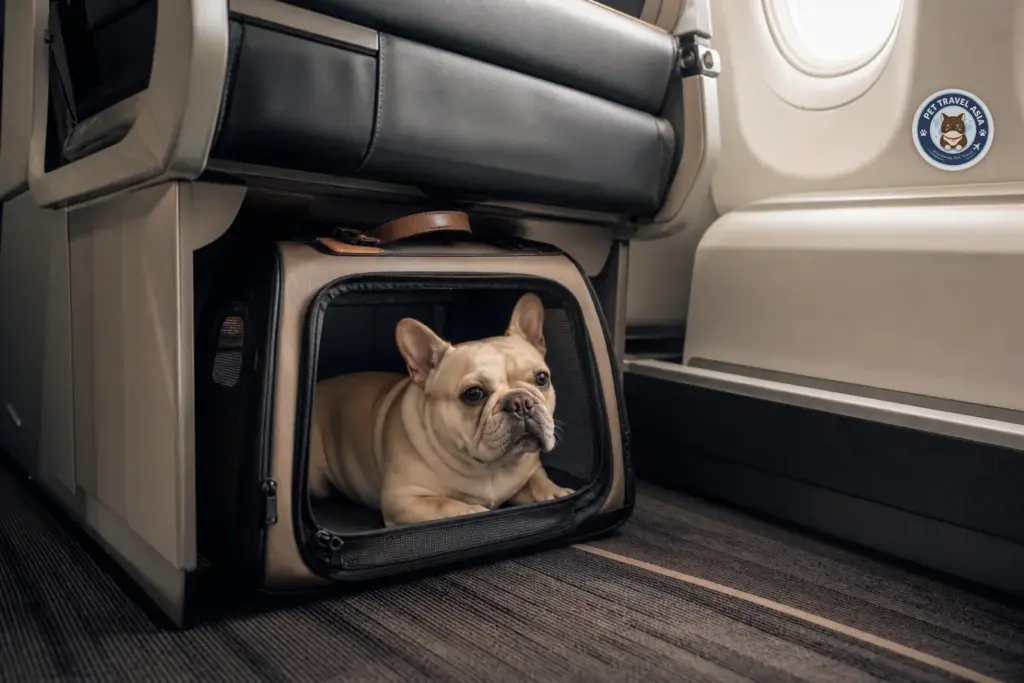
Because of the risks above, many airlines have moved away from carrying brachycephalic breeds in cargo altogether, while still allowing them in the cabin as long as the dog and carrier meet size and weight requirements. Cabin travel keeps your Frenchie in temperature-controlled, pressurized air at your feet, with far less exposure to the conditions that make cargo risky for the breed.
That said, cabin policy is not universal either. Some airlines cap the number of pets allowed in the cabin per flight, some restrict brachycephalic breeds even in the cabin on certain routes, and others require advance approval specifically because of the breed. Always check the airline’s live pet policy for your exact route and date, and confirm again close to departure, since rules can change between booking and boarding.
In-Cabin Carrier Requirements Under IATA Standards
Most airlines base their in-cabin carrier rules on general guidance from IATA, which sets out that a carrier should allow the animal to stand up, turn around, and lie down in a natural position, with adequate ventilation on at least two sides. Soft-sided carriers are commonly preferred because they compress slightly to fit under the seat in front of you.
Beyond that baseline, exact dimensions differ by airline and sometimes by aircraft type. As a general planning range, many carriers accept soft-sided bags roughly 40 to 45 centimeters long, though this is not a fixed number to rely on for booking. Always confirm the precise maximum length, width, and height with your airline before buying a carrier.
Weight Limits and Other Cabin Eligibility Factors
Cabin weight limits are where French Bulldogs often sit close to the edge. Adult Frenchies commonly weigh somewhere in the range of 8 to 14 kilograms, and many airlines set a combined dog-plus-carrier weight limit that can fall below, at, or just above that range. Some airlines quote pet-only weight, others quote pet-plus-carrier weight, and the numbers are not standardized across the industry, so do not assume your dog qualifies based on breed averages alone. Weigh your dog and loaded carrier, then check that figure against your specific airline’s published limit rather than a number quoted elsewhere.
Common Brachycephalic Breeds and What to Watch For
French Bulldogs are far from the only breed affected by these considerations, which matters if you are comparing notes with other owners or traveling with more than one pet.
| Breed | Cabin Travel Note |
|---|---|
| French Bulldog | Commonly restricted from cargo; cabin depends on weight and carrier fit. |
| Pug | Similar respiratory profile; often grouped under the same embargo lists. |
| Boston Terrier | Shorter muzzle, though sometimes less restricted than Frenchies or Pugs. |
| English Bulldog | Larger average size often pushes past cabin weight limits. |
| Shih Tzu | Moderately brachycephalic; policy varies more by airline than breed ban. |
| Persian and Himalayan cats | Similar airway anatomy; some airlines apply comparable cargo limits. |
Treat this table as a starting point, not a final answer, since breed lists are set by individual carriers and revised periodically.
Health Certificate and Documentation
Every international flight with a dog requires a health certificate from an accredited veterinarian, typically issued within a set window before departure that the destination country defines, plus proof of current vaccinations, including rabies. Depending on your route, you may also need an import permit, parasite treatment documentation, or a quarantine exemption. Requirements differ by country, so timelines matter as much as the paperwork itself.
If your trip involves shipping documentation, cost estimates, or quarantine steps, our international pet shipping cost guide breaks down what typically factors into a relocation budget, and our cost calculator can give you a starting estimate.
Why Sedation Is Generally Discouraged or Prohibited
It can be tempting to consider sedation for a nervous flyer, but veterinary and airline guidance generally advises against sedating brachycephalic dogs before or during a flight. Sedatives can suppress the respiratory drive and lower blood pressure right when your dog already has a narrower airway and less capacity to compensate, and altitude-related pressure changes can compound that effect. Many airlines explicitly prohibit sedated pets from boarding and will not accept a dog that appears sedated at check-in. If you are worried about anxiety, talk to your veterinarian ahead of time about non-sedating options such as carrier acclimation, calming wraps, or pheromone products.
When Your Frenchie Does Not Qualify for the Cabin
If your dog exceeds the cabin weight or size limit, cargo is generally not the safer fallback for a brachycephalic breed. A few paths are worth exploring instead: ground transport for shorter regional moves, airlines that accept manifest cargo under closer climate-controlled handling with breed-specific precautions, or a local partner network on the ground at both ends to manage logistics door to door. This is exactly the kind of routing question worth discussing before you book anything. Our pet relocation services page outlines how we support moves for breeds that need extra planning, and our guide to pet shipping companies in Asia can help you compare options.
Frequently Asked Questions
Can French Bulldogs fly in the cargo hold at all?
Some airlines still permit it under specific conditions, but a growing number have embargoed brachycephalic breeds from cargo entirely due to the respiratory risks described above. Always verify current policy directly with the carrier rather than assuming based on past bookings.
How early should I book a cabin seat for my Frenchie?
Most airlines cap the number of pets allowed in the cabin per flight, and that allowance fills up early. Book as soon as your travel dates are confirmed and disclose your pet at the time of booking, not after.
Do all airlines have the same cabin weight limit?
No. Weight limits, and whether they cover the dog alone or the dog plus carrier, vary by airline. Always check the specific figure published by your airline rather than a limit you have seen quoted elsewhere.
What documents do I need for international travel with my Frenchie?
At minimum, a veterinary health certificate issued close to departure and current vaccination records. Import permits or parasite treatment requirements vary by destination country.
What if my flight route does not allow brachycephalic breeds at all?
Some routes restrict brachycephalic breeds regardless of cabin or cargo. Alternative routing, a different carrier, or ground transport for part of the journey may be more realistic, so map this out before committing to travel dates.
Every French Bulldog relocation looks a little different once you factor in your airline, route, and paperwork timeline. If you would like help thinking through cabin eligibility, carrier choice, or documentation for your Frenchie’s next flight, reach out to our team and we can walk through your route together.