Pet Cargo Jakarta: CGK Airport Process
July 16, 2026
Sending a pet abroad can feel most uncertain on departure day. In Jakarta, questions tend to centre on where to go, which documents are checked, and how a dog or cat moves from a familiar car into an aircraft safely. A clear airport plan makes that handover calmer for both you and your pet.
For many international moves from Jabodetabek, the departure point is Soekarno-Hatta International Airport (CGK) in Tangerang. This guide explains the usual pet cargo Jakarta journey at a high level. Exact airline and destination requirements can change, so confirm the route plan before travel.
Why CGK is Jakarta’s main pet-cargo hub
CGK handles much of the region’s international air connectivity, which makes it a practical starting point for pets leaving Jakarta. A direct flight may be possible on some routes; on others, the itinerary may involve a connection. The suitable option depends on the destination rules, airline live-animal acceptance, crate dimensions, weather, and the pet’s individual needs.
Pets travelling in the cargo system are handled as live-animal cargo rather than ordinary luggage. That means the flight booking, terminal handover, and documentation need to line up well before departure. Our air-cargo service page explains the service scope, while this guide focuses on the airport-side experience in Jakarta.
Prepare before travelling to the airport
Departure day should not be the first time your pet sees its travel crate. Use an IATA-compliant crate with enough room for the animal to stand, turn around, and lie naturally, plus secure ventilation and fittings suitable for the route. Encourage crate familiarity gradually at home. Your veterinarian can advise on feeding, hydration, and health considerations for the specific pet; sedation is generally not recommended for air travel because it can create respiratory risk at altitude.
Bring the original documents requested for the route, along with copies where needed. Depending on the destination, this can include vaccination records, an identifying microchip record, laboratory results, import approval, and health paperwork. For export from Indonesia, an animal health document such as SKKH is issued through the appropriate quarantine process. Destination-country rules are separate from airport handling, so review the relevant Indonesia import and export guidance as part of your planning.
The typical CGK departure sequence
Timings and terminal procedures vary, but a well-coordinated pet cargo Jakarta departure commonly follows this sequence:
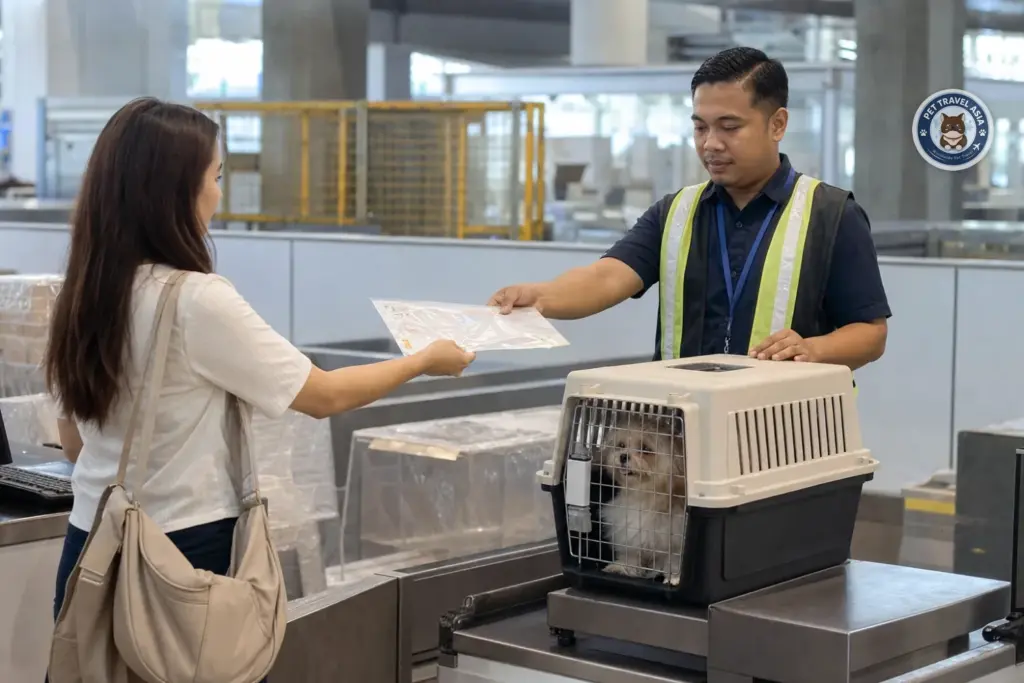
- Arrival and handover: you arrive at the agreed cargo-handling point with the pet, crate, and documents. If collection is arranged, local coordination begins before this point.
- Document review: the paperwork is checked against the booking and the destination’s stated conditions. A missing or inconsistent document can affect the planned departure.
- Quarantine clearance: the relevant animal quarantine process is completed before the pet progresses to cargo handling.
- Crate and cargo acceptance: staff may check the crate’s condition, ventilation, labels, and animal comfort, then record the shipment details and weight.
- Terminal handling and loading: once accepted, the crate moves through the cargo terminal and is prepared for loading according to the airline’s live-animal procedures.
The goal is an orderly handoff, not a rushed one. Our relocation process overview shows how airport day fits into the wider plan from early route review through arrival.
What the quarantine step means at CGK
Barantin, Indonesia’s National Quarantine Agency, is the authority involved in animal quarantine movements. At Soekarno-Hatta, the animal-quarantine working area forms an important checkpoint in an international departure. The officer’s review is not simply an administrative formality: the animal identification, health documentation, and export conditions need to correspond with the journey.
The exact process depends on the animal and destination. Avoid assuming that a document accepted on one route is enough for another. If you need support interpreting and preparing the quarantine stage, see our quarantine assistance. Regulations and operational procedures can change, so your final checklist should be confirmed for the booked flight.
Crate readiness and a calmer airport day
A sturdy crate is central to welfare and acceptance. Check that the door fastens securely, the crate is clean and dry, the pet can move naturally, and any required identification is readable. Label only what the airline or handler requires; do not attach loose items that could create a handling issue. Give yourself enough time for an unhurried final comfort break and a calm goodbye.
Heat, traffic across Jabodetabek, flight connections, and airline cut-off times can all influence the practical schedule. Planning from your home or veterinarian to the cargo terminal is therefore just as important as the flight itself. Where suitable, a door-to-door arrangement can coordinate collection and the handover as one itinerary.
Pet cargo or door-to-door from Jakarta?
| Option | May suit you when | What to clarify |
|---|---|---|
| Airport-to-airport cargo | You can manage local drop-off and have confirmed support at both ends. | Terminal access, documents, crate acceptance, and destination collection. |
| Door-to-door relocation | You prefer one coordinated plan from Jakarta collection through destination arrival. | Collection area, partner coordination, destination handover, and route eligibility. |
Neither route is automatically better. The right choice depends on your destination, the pet’s needs, and how much local coordination you want. If cost is a consideration, use the international pet shipping cost guide for the factors that shape an estimate rather than relying on a generic figure.
FAQ: pet cargo from Jakarta
Which airlines accept live animals from CGK?
Acceptance differs by airline, aircraft, route, season, crate, and pet type. Policies can change, so confirm availability for your proposed flight rather than relying on a general airline list.
Can my pet be collected from my home in Jabodetabek?
Collection may be arranged for eligible journeys through local coordination. The practical plan depends on your address, travel date, crate readiness, and the departure requirements.
How long does the airport process take?
There is no single reliable duration. Document readiness, quarantine processing, cargo cut-off, and airline handling all affect the schedule. Build a route-specific plan well before the flight.
Does CGK handling replace destination import approval?
No. Airport departure handling and destination import compliance are connected but distinct. Your pet must meet the destination’s current requirements as well as the export process from Indonesia.
Plan the departure with the full route in view
A successful CGK departure begins weeks or months earlier with the right documents, crate preparation, and destination checks. Contact PTA to discuss your Jakarta departure, destination, and pet’s needs; our team can help coordinate a route-specific plan with local partners.