Pet Relocation Malaysia to Singapore: Air or Land
October 11, 2026
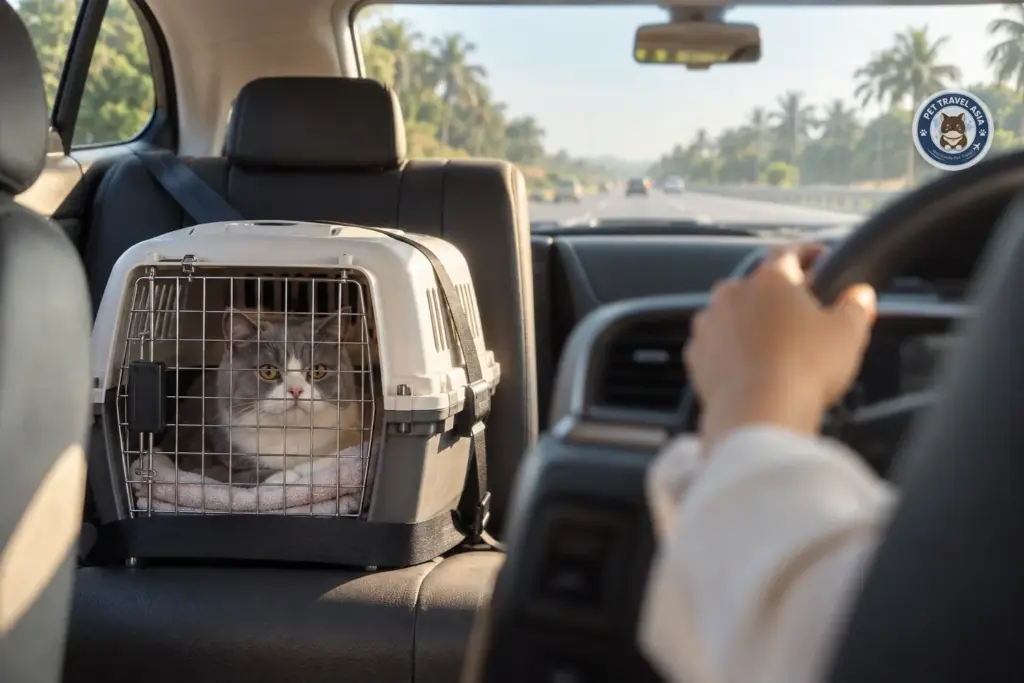
On a map, Malaysia to Singapore looks like the easiest pet move in Asia. The flight from Kuala Lumpur is about an hour, and many families simply drive across from Johor. The paperwork tells a different story. Singapore’s Animal and Veterinary Service (AVS) does not list Malaysia among its lower-risk rabies schedules, so a dog or cat coming from Malaysia is treated much like a pet from anywhere outside those lists: a rabies blood test months in advance, a booked quarantine space, and a stay at the Animal Quarantine Centre after arrival.
This guide is for owners in Kuala Lumpur, Penang, Johor Bahru, or elsewhere in Malaysia who are relocating a dog or cat to Singapore. It explains why the preparation is long, what changes between flying in and driving in through Tuas Checkpoint, and which steps sit on the Malaysian side of the border.
Why a one-hour trip needs months of preparation
AVS groups exporting countries into schedules based on rabies risk. Schedule I and Schedule II cover countries such as Australia, the United Kingdom, Japan, and the United States. Every country not named in those two lists falls under Schedule III, and at the time of writing Malaysia is not named in either. For a Schedule III dog or cat, AVS currently lists these core conditions:
- An ISO-compatible microchip, with the number shown on every vaccination and treatment record.
- A valid rabies vaccination, then a rabies antibody blood test taken at least 28 days after vaccination, with a result of at least 0.5 IU/ml.
- That blood sample taken at least 90 days and no more than 12 months before export.
- Core vaccinations (distemper, adenovirus, and parvovirus for dogs; calicivirus, herpesvirus, and panleukopenia for cats) and parasite treatment shortly before travel.
- A rabies vaccination given again on arrival in Singapore, followed by a quarantine of at least 30 days at the Animal Quarantine Centre (AQC).
The 90-day rule is what stretches the calendar. If your pet’s rabies vaccination is not yet in place, the earliest realistic export date is roughly four months away: about a month for vaccination and blood draw, then at least 90 days of waiting after the sample. Our rabies titer guide explains how the test and the waiting period work.
The Malaysian side: MAQIS and DVS
Leaving Malaysia involves two agencies. MAQIS issues the export permit, while a DVS State office examines the pet and endorses the veterinary health certificate. AVS publishes a Schedule III certificate template: your vet completes the health and treatment sections, and the exporting country’s official government veterinarian endorses the final section. In practice, that means the DVS appointment has to fit inside the short window before travel when parasite treatment and the clinical check are done.
Ask DVS and MAQIS early how they want the Singapore certificate presented, because the destination’s template drives the wording. Our Malaysia pet export guide covers the departure file in more detail.
Licences to sort out before you travel
Singapore asks for two separate licences. First, a dog or cat licence through the AVS Pet Animal Licensing System, which must be in place before you can apply for the import licence. Second, the import licence itself, applied for through the GoBusiness Licensing Portal. AVS currently states the import licence is valid for 90 days from issue and cannot be extended, so time the application against your planned travel date rather than applying as early as possible.
Two other checks belong at the start, not the end. Singapore restricts certain dog breeds and their crosses, and early-generation Bengal and Savannah cats. Housing rules also matter: HDB flats allow only certain dogs and a limited number of cats. If your new home is an HDB flat, confirm your pet is allowed there before you begin the rabies timeline.
Flying in or driving across: what changes
Both routes lead to the same quarantine. The difference is how your pet reaches it and who handles which step on arrival day.
| Step | Flying KUL to SIN | Driving in via Tuas Checkpoint |
|---|---|---|
| Entry point | Changi Animal and Plant Quarantine (CAPQ) at the airport | AVS office at Tuas Checkpoint |
| Appointment | Arrival inspection booked in advance | Inspection booked through NParks e-services, at least 5 days before arrival |
| Opening hours | Set by the booked inspection slot | Currently Monday to Saturday, 7am to 12pm; closed Sundays and public holidays |
| Container | IATA-compliant rigid crate; soft bags are not accepted for the transfer to CAPQ | Hard crate required |
| Getting there | Airline delivers the pet to CAPQ | Use the ICA Tuas arrival cargo lane to reach the AVS office |
| After inspection | Transfer to AQC for quarantine | AVS-appointed transport takes the pet to AQC |
Driving can look simpler because there is no airline acceptance to arrange, but the Tuas window is narrow. AVS currently charges S$133 per hour or part thereof for an inspection without an appointment, and the morning-only hours mean a traffic jam at the Second Link can push you past the slot. If you drive, plan to cross early and keep the inspection booking, licences, and certificate originals in one folder in the car. A Customs In-Payment (GST) permit may also be needed before arrival; AVS notes it is valid for 10 working days, so it cannot be arranged weeks ahead.
Flying adds an airline booking and crate check-in at KLIA, but the arrival handover happens inside the airport system. For many families the deciding factor is simply where they will be on the day: already in Johor, or flying from Kuala Lumpur or Penang.
Booking the quarantine space
AQC space is booked by the owner or agent through the AVS Quarantine Management System, and AVS asks for the rabies and general vaccination records when you reserve. Reserve the quarantine space as soon as your blood test result is back, then build the flight or drive date around the confirmed slot. Fees for the stay are listed separately by AVS and change from time to time, so check the current schedule rather than relying on an old quote. For a broader view of how the whole move fits together, see our guide to bringing a pet to Singapore, or get an estimate with the cost calculator.
A working timeline from Malaysia
Every pet’s dates depend on its records, but a Schedule III move usually follows this order:
- Confirm breed and housing eligibility, and check the microchip reads correctly.
- Give the rabies vaccination if it is not current, then draw blood at least 28 days later for the antibody test.
- When the result passes, book the AQC space and count at least 90 days from the sample date.
- Apply for the dog or cat licence, then the import licence within its 90-day validity.
- Arrange the MAQIS export permit and the DVS appointment for the certificate endorsement.
- Within the final days, complete parasite treatment and the health check, book the arrival inspection, and arrange the GST permit if needed.
- Travel, complete inspection, and your pet begins its quarantine stay.
For route specifics on both sides, see our Malaysia to Singapore route page and the country overviews for Malaysia and Singapore. The Singapore import requirements page keeps the destination checklist in one place.
Frequently asked questions
Is there really no quarantine shortcut for pets from Malaysia?
Under the current AVS conditions, pets from Schedule III countries, which at the time of writing includes Malaysia, serve at least 30 days at the AQC. AVS reviews its schedules, so confirm Malaysia’s status when you start planning.
Can I drive my pet across the Causeway or the Second Link?
AVS currently directs dogs and cats arriving by land to its office at Tuas Checkpoint. If your licence names another checkpoint, AVS advises on clearance when it issues the licence. Do not assume a different crossing is available without that confirmation.
My pet lives in Singapore and we are taking a weekend trip to Malaysia. Is that a problem?
Yes, it can be. AVS states that a pet which enters Malaysia, even briefly, is treated as an import from Malaysia when it returns, with the same conditions and quarantine. Check before you travel.
How long should I plan for the whole move?
If the rabies vaccination and blood test still need to be done, plan for around four months before travel, plus at least 30 days of quarantine after arrival. A pet with a valid, older test result may be ready sooner, but confirm the sample date fits the 90-day and 12-month window.
Can a cat travel in a soft carrier?
AVS requires a rigid container. For land arrivals it asks for a hard crate, and for air arrivals soft bags are not accepted for the transfer to CAPQ.
If you would like help lining up the blood test, licences, quarantine booking, and the Malaysian export steps, contact our team and we will map the dates for your pet’s move.