Pet Relocation Manila: BAI and NAIA Guide
August 3, 2026
Moving with a pet through Manila can feel opaque even after the flight has been chosen. The hard part is not simply getting to Ninoy Aquino International Airport (NAIA): the order of the permit, veterinary paperwork, crate check, and terminal handover has to suit the direction of travel.
This guide explains pet relocation Manila from the airport-process perspective. It is designed for people bringing a pet into the Philippines, as well as owners sending one out of Manila. It does not replace destination rules; those rules and airline policies can change, so PTA verifies the route-specific requirements before each shipment.
Why Manila is a process point, not just a destination
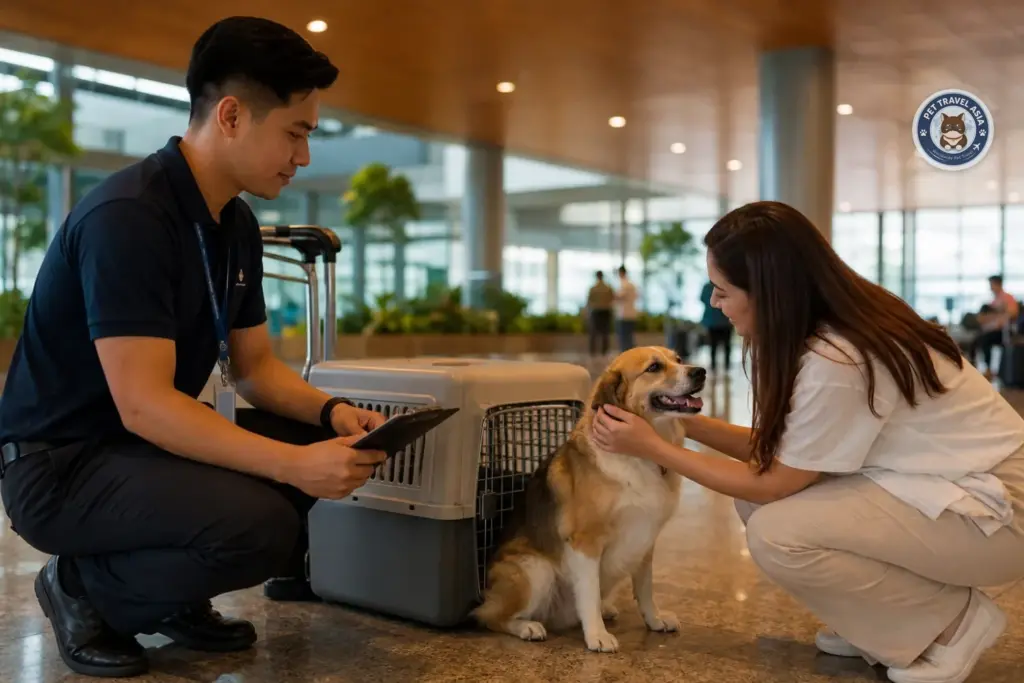
NAIA is a key cargo gateway for pets moving through the Philippines. At this point, paperwork is matched to the animal, the crate is checked for safe transport, and the release or export process is coordinated with the relevant authorities and carrier. The route direction changes the paperwork entirely: an arrival needs an import path, while a departure needs an export path.
That is why it helps to settle the authority and sequence before a pet is taken to the terminal. For a country-level overview, start with PTA’s Philippines pet import and export guide. If your pet is travelling from Indonesia, the Indonesia-to-Philippines route page keeps the origin-side process separate from the Manila arrival steps.
Arriving in Manila: permit first, flight second
For a pet entering the Philippines, the BAI import permit, commonly described as SPS Clearance, is part of the preparation before departure. The current country guide also identifies a microchip and rabies certification as core items. Rather than treating these as a checklist to finish at the airport, make the permit the anchor for the whole booking sequence.
After arrival at NAIA, the focus moves to document presentation, release coordination, and the handover from cargo handling to the owner or their appointed team. The published guidance indicates a 30-day home quarantine for imported pets. Regulations can change, so confirm the current conditions for your animal and travel date through the Philippines guide before making final arrangements.
| Planning point | What to coordinate |
|---|---|
| Before booking | Check the BAI permit path, the destination requirements, and the available live-animal routing. |
| Before departure | Align the microchip, rabies records, veterinary certificate, and permit details so names and identification match. |
| At NAIA arrival | Prepare for cargo release, document review, and onward collection or local delivery coordination. |
| After collection | Follow the applicable home-quarantine and local-care instructions confirmed for the trip. |
Departing Manila: export certificate and terminal handover
For an outbound move, the direction reverses. The Philippines guidance lists a BAI export Veterinary Certificate alongside the microchip and rabies records. A pet departing Manila is handled through the NAIA cargo terminal; departures from Cebu may use Mactan-Cebu instead. The terminal inspection is where the documents, animal, crate, and booking need to tell one consistent story.
Do not leave the crate decision until the final day. Handlers and carriers need a crate that is suitable for the animal and journey. PTA’s IATA crate guide explains the sizing and construction principles in detail. At the terminal, practical preparation includes a secure door, adequate ventilation, absorbent lining, correctly attached labels, and time for the animal to settle before handover.
Plan the export sequence around document validity and the confirmed cargo acceptance process, rather than around an assumed terminal timetable. Airline live-animal policies vary by route and can change. A calm, well-prepared handover is more useful than arriving early with paperwork that does not match the booking.
From the Philippines to the United States
The Philippines-to-US route deserves an early check because the United States applies CDC dog-import rules according to the rabies-risk category of the country of origin. That category, and therefore the document path, must be confirmed for the date of travel; it should not be assumed from an older trip or online discussion.
PTA’s United States import guide explains the current CDC framework, including the Dog Import Form pathway where applicable. The guide notes that there is no federal quarantine, while state and airline requirements can still differ. For cats, airline and state requirements also need route-specific confirmation. Allowing roughly 6–12 weeks to plan gives room to validate the current route rather than forcing a late change.
A realistic planning window for Manila
For arrivals to or departures from the Philippines, the country guidance recommends planning 4–8 weeks ahead. That is a planning range, not a guaranteed turnaround: permit processing, document validity, cargo capacity, and the destination’s rules all affect the final schedule. Moves to countries with stricter import controls, including Australia, Japan, or New Zealand, may need a longer start.
The critical path is usually the permit and the documents that must remain valid at departure and arrival. Keep the flight flexible until the documentation sequence and carrier acceptance have been checked. If you are arriving from Australia, see the example corridor in this Australia-to-Philippines guide; it is a useful route reference without turning this Manila guide into an Australia export article.
Short-nosed breeds and cabin options
Some airlines restrict brachycephalic, or short-nosed, breeds in cargo because of breathing and temperature-management risks. The policy depends on the airline, route, aircraft, and date, so confirm it before the rest of the plan is locked. Where cargo is not appropriate or available, a VIP in-cabin escort may be an option for an eligible pet.
Cabin travel is not automatic: carrier size, animal comfort, route rules, and airline approval still apply. PTA can coordinate the appropriate option with its local partner network rather than treating one transport method as right for every pet.
FAQ
Do I need a BAI permit before flying into Manila?
Yes, the current Philippines guidance identifies a BAI import permit or SPS Clearance for incoming pets. Confirm the current requirement and timing for your route before booking.
What happens to my pet at NAIA?
The pet is processed through the cargo-release and document-review steps before collection. The exact sequence depends on the direction of travel, carrier, and current authority requirements.
Can a pet leave the Philippines through Manila?
Yes, outbound pets can use NAIA cargo processing with the appropriate BAI export Veterinary Certificate and supporting records. Cebu departures may be coordinated through Mactan-Cebu.
How early should I start?
Use 4–8 weeks as a planning range for Philippines moves, and begin earlier where the destination has stricter requirements or the route needs special cargo approval.
For a Manila move, PTA can map the permit order, terminal coordination, crate readiness, and onward handover around your actual route. Contact our team to have the latest requirements checked before you commit to a flight.