Pet Relocation United States to Japan: 180-Day Clock
August 7, 2026
A move from the United States to Japan can come with a fixed reporting date, a school term, or a lease handover. That makes it tempting to begin with a flight search. For a pet, however, the arrival date is the more useful starting point.
Pet relocation United States to Japan is governed by an order of health and import steps that cannot simply be compressed near departure. A calm, backward-planned schedule gives your family time to correct a document mismatch before it becomes a travel problem.
Why Japan is planned backward from arrival
Many international moves can start with a target flight and work forward. Japan works differently because the rabies-titer waiting period must be complete before the pet arrives. The published planning window is 7+ months for entry to Japan, so the landing date should anchor the calendar.
That does not mean every family follows an identical schedule. Veterinary availability, document review, cargo acceptance, and the pet’s existing records can all affect the plan. It does mean that a late first step may change the realistic arrival date, even if flights are available.
Set the Japan arrival date first, then map every veterinary and document milestone backward from it. This approach makes the immovable waiting period visible before a household commits to an itinerary, housing arrangement, or pet-care plan.
The sequence that cannot be reversed
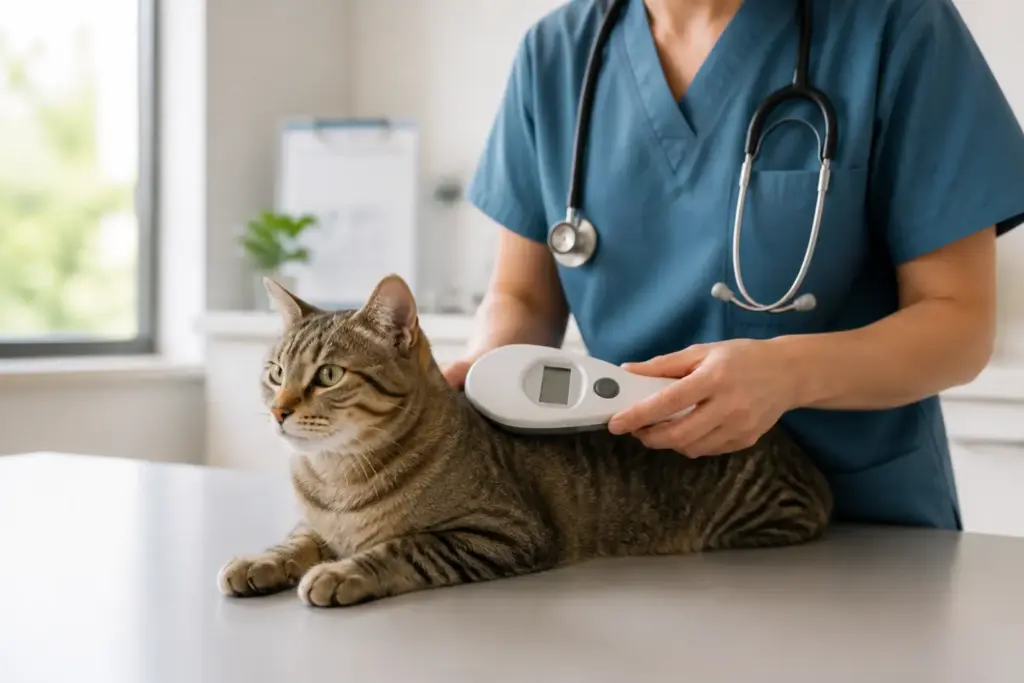
The timeline begins with identity, not with a booking. An ISO 15-digit microchip needs to be implanted before the rabies vaccinations used for the import process. Japan requires two rabies vaccinations, followed by a rabies titer and its 180-day waiting period before arrival. The detailed Japan requirements remain on the Japan import page because the destination authority determines them.
The practical risk is not only missing a document. If the microchip is placed after a relevant vaccination, that vaccination may not support the import sequence. If a record does not carry the same chip number throughout, the team may need to pause and verify it. A titer result is also a calendar milestone, not just a lab result. For an explanation of that test itself, see our rabies titer guide.
| Step | Who handles it | Why the order matters |
|---|---|---|
| Microchip identification | Veterinarian | Links the pet to later vaccination and certificate records. |
| Rabies vaccination sequence | Veterinarian | Must follow the identified pet record used for Japan entry. |
| Rabies titer and waiting period | Veterinarian, laboratory, owner | Sets the earliest feasible arrival date. |
| Japan notification and US export papers | Owner, accredited veterinarian, relocation provider | Connects the arrival plan to the final travel file. |
What the United States side issues
Japan sets the entry conditions, while the United States side prepares the export record. The core US process includes a health certificate from an accredited veterinarian and USDA APHIS export endorsement through VEHCS. Our United States pet export page explains that origin-side framework.
For dogs, the travel file also needs to fit the applicable CDC export framework. This is a reason to treat the veterinary appointment, certificate drafting, and endorsement as connected work rather than separate errands. Names, dates, and microchip information need to agree across the records that accompany the pet.
US export planning is often estimated at 6 to 12 weeks, with longer planning for destinations such as Japan. That estimate does not replace the Japan timeline. It sits inside it, nearer to departure, after the earlier health sequence has been confirmed.
MAFF notification and arrival inspection
Before departure, Japan requires advance notification to MAFF. On arrival, animal quarantine inspection is handled by AQS at Narita or Kansai. The relevant question is not whether an inspection will occur, but whether the entire file supports a straightforward inspection.
Japan’s published quarantine range is 12 hours to 180 days depending on preparation. That range, and the current conditions behind it, should always be reviewed against the official Japan-entry plan on our site before travel. Complete preparation can support a shorter inspection, but no team should promise an outcome in advance.
Keep the arrival plan practical. Decide who will be present, how onward transport will be arranged after clearance, and where the pet can rest. The goal is a file that is easy for the inspection team to follow, not a last-minute stack of disconnected papers.
US cargo terminal and crate readiness
At US cargo terminals such as JFK, LAX, SFO, or ORD, a pet’s travel setup can be reviewed before acceptance. The crate must be IATA-compliant, and the terminal may identify a problem when there is little time left to change it.
Check the crate well before travel, including its condition, door function, labels required for the shipment, and whether the pet can stand, turn, and rest comfortably. Exact sizing guidance belongs in our IATA crate guide. Early crate practice also helps the pet arrive at the terminal familiar with the space.
Airline acceptance and cargo routing can vary by date and route. A confirmed calendar should therefore include a final acceptance check rather than treating a preliminary route discussion as a guarantee.
If your move date is sooner than 180 days
This is common for military families, corporate assignments, and academic moves. The honest answer is that the waiting period cannot be purchased away or negotiated shorter. What can be managed is the order of the first veterinary steps, the selected travel date, and whether the pet follows after the household.
Japan is an outlier among many Asia-bound moves. For perspective, a route such as a move into Singapore can have a materially different planning window. That comparison is useful only for setting expectations, not for transferring Singapore requirements to Japan.
Who to work with
Turn the relocation date into a backward calendar with an accredited veterinarian in the United States, and check airline and cargo-terminal acceptance for the current route. Verify the live requirements with the destination authority before departure, because regulations and acceptance conditions can change.
About our coverage. Pet Travel Asia coordinates moves where the pet’s origin or final destination is Indonesia, the Philippines, Thailand, Malaysia, Singapore or Vietnam, so we do not arrange US-to-Japan relocations. Use this guide to plan the sequence, and confirm current requirements with Japan’s Animal Quarantine Service and an accredited veterinarian in the United States. If your move involves one of those six countries, see our route coverage.
Frequently asked questions
How long does pet relocation from the United States to Japan take?
Plan around 7+ months because Japan’s titer waiting period must be complete before arrival. The full timing depends on existing records, veterinary appointments, export endorsement, and Japan’s current entry conditions.
Can the 180-day waiting period be accelerated?
No. Build the move around it. The workable choices are starting the correct sequence early, adjusting the pet’s travel date, or arranging for the pet to follow later.
Do cats and dogs follow different Japan timelines?
Both species need a Japan-specific import plan. Their handling and travel options may differ, but the destination sequence and documentation still need checking for the individual pet.
What if the titer result does not support the plan?
Do not assume a workaround. Review the result and records against Japan’s current requirements, then revise the calendar with a qualified veterinarian and the relocation team.
Can my pet travel in the cabin?
Cabin travel depends on the route, pet, and carrier acceptance. It should be evaluated early, while keeping the same Japan health and entry timeline in place.