
Pet Relocation Indonesia to USA: CDC Rules Explained
October 20, 2026
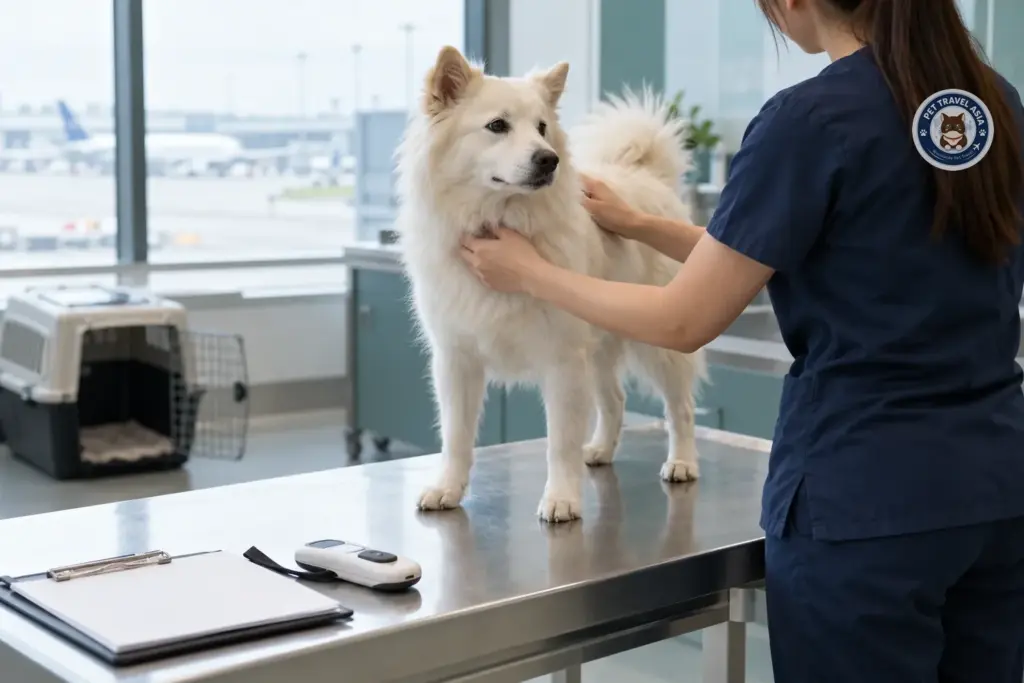
Moving to the United States from Jakarta or Bali with a dog is a different project from moving with a cat. Since 1 August 2024, the US Centers for Disease Control and Prevention (CDC) has applied a stricter set of rules to dogs that have been in a country it classes as high risk for dog rabies, and Indonesia is on that list. Cats, by contrast, face almost no federal entry paperwork.
This guide walks through the US side for an owner leaving Indonesia: which dog pathway applies to you, what each document is for, why the arrival airport matters so much, and how the Indonesian export steps fit around it. If you are moving a cat, the shorter section near the end is the one you need.
Why a dog leaving Indonesia is treated as high risk
CDC’s rules do not depend on your dog’s nationality or yours. They depend on where the dog has been. Any dog that has been in a high-risk country during the 6 months before arriving in the US follows the high-risk requirements. Because Indonesia is on CDC’s list, a dog that has lived in Indonesia is covered, even if it flies through a hub such as Singapore, which is not on the list. A stopover does not reset the 6-month window.
Within that group, CDC splits dogs into two pathways based on where the rabies vaccine was given:
- US-vaccinated dogs: dogs that left the US with a valid US rabies vaccination and a CDC certification form endorsed by the US Department of Agriculture (USDA) before departure. This mostly applies to expat families returning home with a dog they took abroad.
- Foreign-vaccinated dogs: every other dog, including a dog adopted or bought in Indonesia, or a US dog whose vaccination was renewed by a vet in Indonesia without the right US paperwork.
CDC states that unvaccinated dogs from high-risk countries are not allowed to enter at all.
The foreign-vaccinated pathway, step by step
Most dogs relocating from Indonesia fall here. According to CDC’s page for foreign-vaccinated dogs from high-risk countries, the dog needs all of the following:
- Age: at least 6 months old on arrival.
- Microchip: readable by a universal scanner and implanted before the rabies vaccine. CDC treats a vaccine given before the chip as invalid.
- Rabies vaccination: given at 12 weeks of age or older, with the first valid dose at least 28 days before entry.
- Rabies serology (titre) test: blood drawn at least 30 days after the first valid vaccine and at least 28 days before entry, tested by a laboratory on CDC’s approved list. CDC does not accept results from other labs.
- Certification of Foreign Rabies Vaccination and Microchip: completed by your vet and endorsed by an official government veterinarian of the exporting country, no more than 30 days before travel.
- A reservation at a CDC-registered animal care facility at the arrival airport, covering an examination and revaccination with a US-licensed rabies vaccine.
- CDC Dog Import Form receipt: free, one per dog, filed online and tied to a specific arrival date and airport.
Without a valid titre, the facility reservation must also include a 28-day quarantine, paid for by the owner. CDC notes that this quarantine can be shortened in some cases, but the titre route is the one most owners plan around. Our guide to rabies titre tests explains how the blood test works and why it sets the pace of the whole move.
The arrival airport decides your flight plan
This is the rule that catches people out. A foreign-vaccinated dog must land on an international flight directly at an airport that has a CDC-registered animal care facility, and that airport must match the one on the Dog Import Form receipt. The dog cannot take a domestic connection inside the US until the facility has finished its examination and revaccination.
Only a handful of major gateways have these facilities. Los Angeles (LAX) and New York (JFK) have been among them, but the list can change, so check CDC’s current list of registered facilities before booking. In practice, if you are moving to Denver or Austin, your dog will usually land at one of those gateways first, clear the facility, and only then continue. Plan the facility reservation before you lock in the airline routing, not after, because facilities have limited capacity and the reservation confirmation has to be shown to the airline before boarding.
For which carriers accept pets out of Indonesia and how they route, see airlines that carry pets from Indonesia.
Returning to the US with a US-vaccinated dog
If your dog travelled out of the US with you, check its paperwork before you renew anything in Indonesia. CDC’s US-vaccinated pathway asks for the age, microchip, and Dog Import Form steps above, plus a Certification of US-issued Rabies Vaccination form completed by a USDA-accredited vet and endorsed by USDA before the dog left the US. That form can be reused while the vaccine stays valid. Dogs on this pathway can arrive at any airport, seaport, or land crossing that matches their Dog Import Form, and do not need a facility reservation.
The catch: once that US vaccine lapses and the booster is given in Indonesia, the dog generally moves to the foreign-vaccinated pathway. If you expect to move back to the US, note your dog’s US vaccine expiry date and plan the return before it lapses.
How the timeline fits together
CDC’s own checklist for foreign-vaccinated dogs works backward from the flight. Adding the Indonesian export side gives a sequence like this:
| When | US side (CDC) | Indonesian side |
|---|---|---|
| 60+ days before travel | Microchip, then rabies vaccine; book flights with an approved arrival airport | Check the vet clinic can issue English-language records |
| 30+ days before travel | Titre blood draw (at least 28 days before entry); reserve the animal care facility | Plan the export health certificate and quarantine inspection with Barantin |
| Within 30 days of travel | Vet completes the Certification form; official government vet endorses it | Health certificate and export quarantine documents issued |
| Week of travel | Submit the CDC Dog Import Form | Crate check and cargo or excess-baggage acceptance |
The titre is the step that most often pushes the date back, because the sample usually has to reach an approved laboratory overseas and the result has to come back before the 28-day count can end. Starting three months or more ahead gives room for a retest. CDC also requires all documents to be in English or to come with a certified English translation, so Bahasa Indonesia-only vaccination books will not be enough.
On the Indonesian side, the dog still needs a veterinary health certificate and export clearance from Barantin. Our pet export from Indonesia guide covers that sequence in detail, and the Indonesia to United States route page summarises both ends of the move. For the wider picture, see our Indonesia relocation overview and the United States import rules.
Moving a cat: a much shorter list
CDC does not require a rabies vaccine or a general health certificate for cats entering the US. Cats must appear healthy on arrival and can be refused entry if they show signs of a disease that can spread to people. CDC still recommends rabies vaccination, and your airline or destination state may require a health certificate, so most owners travel with an English health certificate and vaccination record anyway.
The big exception is Hawaii. Hawaii runs its own rabies quarantine for every arriving dog and cat. Pets that meet its 5-Day-or-Less requirements, which include two rabies vaccinations, a passing FAVN antibody test, and a 30-day wait after that test, can be released at the airport after inspection. Pets that do not qualify face quarantine of up to 120 days. Moving to Hawaii means planning months earlier than for the mainland. Our page on cat relocation to the United States covers the cat side for Southeast Asian origins.
Frequently asked questions
Can I bring a dog I adopted in Bali to the US?
A dog adopted in Indonesia will normally follow the foreign-vaccinated pathway: microchip, valid vaccine, titre from an approved lab, endorsed certification, a facility reservation, and a Dog Import Form. Dogs imported for resale or rehoming can also fall under additional USDA rules, so explain the dog’s situation honestly when you plan.
Does my dog need to be quarantined in the US?
Not if it has a passing titre from a CDC-approved laboratory. Without one, the dog must complete a 28-day quarantine at the CDC-registered facility at your arrival airport, at your cost.
Can my dog transit through Singapore to avoid the high-risk rules?
No. The rules look at every country the dog has been in during the previous 6 months. A dog that lived in Indonesia is covered regardless of the transit point.
How much does a move from Indonesia to the US cost?
Our route page gives an indicative range of about USD 2,500 to 5,500 for one cat or small dog, door to door. The titre test, facility fees, crate size, and routing all move the figure, and costs set by authorities and facilities can change. Try the cost calculator for a first estimate.
How early should I start?
For a dog, three months or more is a sensible baseline, longer if the dog still needs its microchip or first rabies vaccine. For a cat going to the mainland, a few weeks is often workable. For Hawaii, start several months ahead.
Every dog’s file is a little different, and the pathway decision is the one that is hardest to undo. If you would like us to check which CDC route applies and map the dates from your move, tell us about your pet and your timeline.