Pet Relocation Services in Malaysia: What to Ask
November 17, 2026
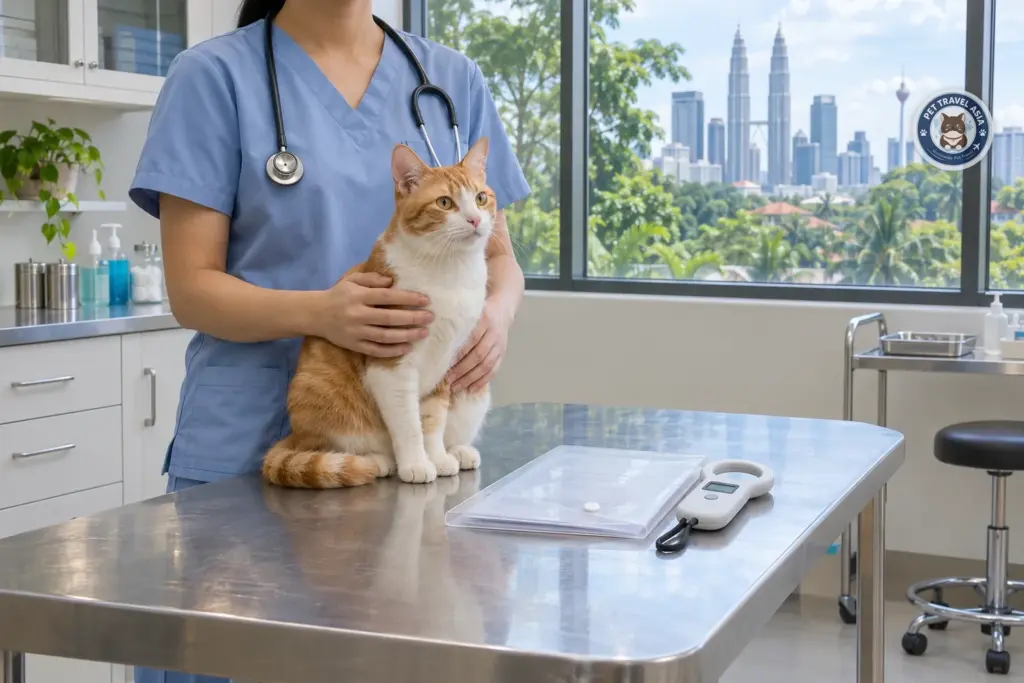
Choosing a pet relocation service in Malaysia is easier once you know where the work actually sits. An arrival in Kuala Lumpur depends on an import approval from the veterinary authority, a permit issued against that approval, and an inspection when your pet lands. A departure depends mostly on the country your pet is flying to. A good provider can explain, step by step, who does each of those things. A weak one sends a price and a date.
Malaysia adds two wrinkles that catch people out. The rules are not identical across the country, because Sabah and Sarawak run their own animal entry conditions. And some dog breeds are restricted or not accepted at all. This guide covers what you can reasonably handle yourself, what owners usually hand over, the questions worth asking every provider, and the warning signs in a quote.
Arriving or leaving: two different jobs
Before comparing companies, be clear about direction. Providers that handle arrivals well do not always handle departures well, and the reverse is also true.
Moving into Malaysia. The usual sequence starts with approval from DVS for the import, followed by an import permit applied for through the online permit system, then a health certificate from the origin country that matches Malaysia’s conditions. On arrival, the pet and the original documents are checked at the entry point. Whether your pet goes home the same day or spends time in quarantine depends on how Malaysia classifies the country it is coming from and on whether the paperwork matches. Our guide to relocating a pet to Malaysia walks through that planning order.
Moving out of Malaysia. Here the destination leads. Malaysia issues the export health paperwork, but the receiving country decides whether you need an import permit, a rabies antibody test, a waiting period or quarantine. Our Malaysia pet export guide explains why the destination has to be checked first.
When you contact providers, give them the direction, both cities, the Malaysian state involved and your target month. Then notice what they ask next. A serious provider asks about the microchip, the vaccination record and the breed before it talks about price.
What owners handle themselves, and what they hand over
Plenty of owners manage a simple Malaysia move with little outside help, for example one healthy cat flying with them from a nearby country. Others delegate most of it because they are still overseas, the pet must fly as cargo, or the destination has strict rules.
| Part of the move | Can an owner do it? | Why it is often delegated |
|---|---|---|
| Microchip, rabies vaccination and vet checks | Yes, with your own vet | Rarely delegated, but someone should check dates and numbers match before anything is filed |
| DVS import approval and the import permit | Yes, in principle | The online application and follow-up are easier for someone who files them regularly and knows which version of the requirements applies |
| Health certificate in the origin country | Yes, if you are there | It is usually issued and endorsed close to the flight, and it has to match Malaysia’s conditions line by line |
| Export health certificate when leaving Malaysia | Yes, if you are in Malaysia | Timing has to fit the flight and the destination’s rules, which may include tests done months earlier |
| Airline booking, especially as cargo | Sometimes | Live animal space, crate requirements and breed or heat restrictions differ by airline and season |
| Arrival inspection and collection | Only if you are present | Someone has to present the pet and original documents at KLIA, Penang, Kota Kinabalu or Kuching on the day |
If you are heading to a country that requires a rabies antibody test, read our rabies titer guide before you collect quotes. It will help you spot a timeline that does not add up.
Questions to ask every Malaysia provider
Send the same list to each company and compare the written answers.
- Who applies for the DVS approval and the import permit, and when? Ask how you will see the approval and the permit before your pet flies.
- Which arrival airport and state does your plan assume? A plan built for Kuala Lumpur does not automatically work for Sabah or Sarawak. If your pet will continue on a domestic flight, ask how that second leg is handled.
- Have you checked my dog’s breed? Malaysia restricts some breeds and does not accept others. This should be settled before any booking is paid.
- How does my origin country affect quarantine? Ask which category your origin falls into under the current DVS classification and what that means on arrival.
- Who will be at the airport? Ask for the name of the person or partner who meets your pet and presents the documents.
- Will my pet fly with me or as cargo? The paperwork, airline rules and costs differ. Our comparison of cargo, cabin and checked baggage explains the options.
- Who handles the other country? For departures, ask who checks the destination’s rules, applies for any permit and arranges collection there.
- What is not included, and what happens if the date moves? Vet fees, tests, the crate, government fees and quarantine charges are often extra, and a permit or certificate may need redoing if the flight changes.
Before you pay a deposit, ask for a one-page plan that names who is responsible for each step at both ends of the route.
Red flags in a Malaysia quote
- A promise that your pet “will not need quarantine” before anyone has asked where it is flying from.
- No question about the dog’s breed, or a vague answer when you ask about restricted breeds.
- The same plan offered for Kuala Lumpur, Kota Kinabalu and Kuching without any mention of state differences.
- A fixed flight date before the import permit or the destination’s requirements have been checked.
- Pressure to pay in full to a personal account with no written scope. Our page on pet transport scams lists other warning signs.
- Documents that will be “corrected later” when the microchip number or vaccination dates do not match.
Local company or regional coordinator?
A company based in Kuala Lumpur is usually strongest on Malaysian paperwork and on the KLIA handover. That works well when the other end of the route is simple or already covered. A regional coordinator helps when both ends need managing. A move from Singapore to Kuala Lumpur, for example, involves Singapore’s export process as well as Malaysia’s import permit, and both have to line up with one travel date. Our guides on Singapore to Malaysia and Malaysia to Singapore show how those two sides connect.
Neither model wins by default. What matters is that someone is accountable in each country and that you know who it is. PTA works as a coordinator across Asia with a partner network on the ground, so a route such as Indonesia to Malaysia is planned as one move with a single point of contact.
Frequently asked questions
Do I need a pet relocation service to bring a pet into Malaysia?
Not always. An owner travelling with a healthy cat or a non-restricted dog, with complete records, can often manage the application and arrival personally. Help is most useful when you cannot be at the airport, when the pet flies as cargo, or when documents come from more than one country.
Is moving a pet to Sabah or Sarawak the same as Kuala Lumpur?
No. Sabah and Sarawak apply their own animal entry conditions, so treat them as separate destinations and tell the provider about any onward domestic flight from the start.
How early should I contact a provider?
As soon as you have a target month. The permit, the origin health certificate and the flight all have time windows, and a breed or vaccination problem is far easier to solve with weeks in hand. For departures to countries that require an antibody test, plan in months.
What should I send to get a useful quote?
Origin and destination cities, the Malaysian state, target month, species, breed, age, weight, microchip number and photos of the vaccination record. With those, a provider can tell you what is missing instead of guessing.
Talk through your Malaysia route
If you are comparing providers, we are glad to be one of them. See our Malaysia pet relocation page and the Malaysia import requirements summary, then contact the PTA team with your route and your pet’s details. We will tell you which steps we would take on, which stay with you, and what needs confirming with DVS or MAQIS first.