Importing Cats to Singapore: AVS Rules
September 4, 2026
Importing a cat to Singapore can feel deceptively simple when every checklist item appears to be in place. The difficult part is that the arrival plan may not have one fixed outcome: depending on the confirmed category, quarantine can range from no stay to a longer stay. That uncertainty changes what a cat needs before departure and what you need ready after landing.
The practical goal is not to predict an outcome too early. It is to build a calm plan that works whether your cat is released promptly or needs a monitored stay. Start the paperwork early, keep the final decisions flexible, and make the first room at your new home ready before the flight.
Your cat’s Singapore plan is built around a range, not one date
For a cat arriving in Singapore, the working range for quarantine is 0 to 30 days, depending on the confirmed category, so your arrival plan should support both a prompt release and a possible stay. The range is not a reason to delay planning. It is the reason to plan two connected scenarios from the beginning.
In the first scenario, a prepared person can receive your cat and take it to a quiet first room. In the second, someone needs to remain available for status updates, decisions, and the eventual collection. The Singapore import hub is the right place to revisit the current regulatory summary as your dates take shape: Singapore pet import requirements.
Keep your home-arrival plan separate from your airline plan. A confirmed flight does not remove the need to confirm how AVS will assess the supporting file. That distinction helps prevent a last-minute assumption from turning into a rushed handover.
What the AVS category determines, and what it does not
AVS uses a country-category system. The category affects how supporting documents are assessed and whether a quarantine arrangement may be needed. It can change, so treat it as a live confirmation rather than a label copied from an old relocation plan.
The category does not replace the core preparation. An AVS import licence, a microchip, and vaccination records remain part of the import pathway. For a fuller explanation of the category process, see our guide on moving a pet from Indonesia to Singapore; use it as a process reference, not as an assumption about your own country of departure.
Your cat and a dog generally follow similar document pathways, where the sequence matters most. What makes a cat’s plan feel different is the need to preserve familiar routines if the arrival is not immediate.
Work backwards from arrival over four to ten weeks
Singapore entry planning should begin around four to ten weeks before arrival. That window gives you room to gather records, align veterinary appointments, apply for the import licence, and check airline acceptance without forcing every decision into the final days.
At the start, collect the records you already have and identify gaps with your veterinarian. In the middle of the window, coordinate the AVS import licence and any service support. Closer to departure, reconfirm the details that depend on the actual flight and arrival arrangement. Our import permit support can help keep the licence work coordinated with the rest of the move.
Do not use a route page as a universal rulebook. If Indonesia is your departure point, the Indonesia to Singapore relocation route can show the type of coordination involved, while your own category and travel date still need confirmation.
Prepare your cat for both arrival possibilities
For a prompt release, arrange a quiet pickup, a secure carrier transfer, and a direct journey to the new home. For a possible stay, prepare a clear handover note for the person monitoring updates and keep familiar feeding, litter, and comfort information easy to share. A favourite blanket or a small item carrying the scent of home can make the transition less abrupt.
This is not the moment to reinvent crate training. Build on the familiar routine your cat already knows, and review practical carrier preparation in our IATA crate guide. For a deeper cat-focused discussion of travel behaviour and gradual preparation, see shipping a cat abroad from Indonesia.
If a stay becomes necessary, PTA’s quarantine assistance can coordinate facility booking, status monitoring, and release coordination. Read about quarantine assistance before you decide who will be available locally.
Set up one calm room before collection
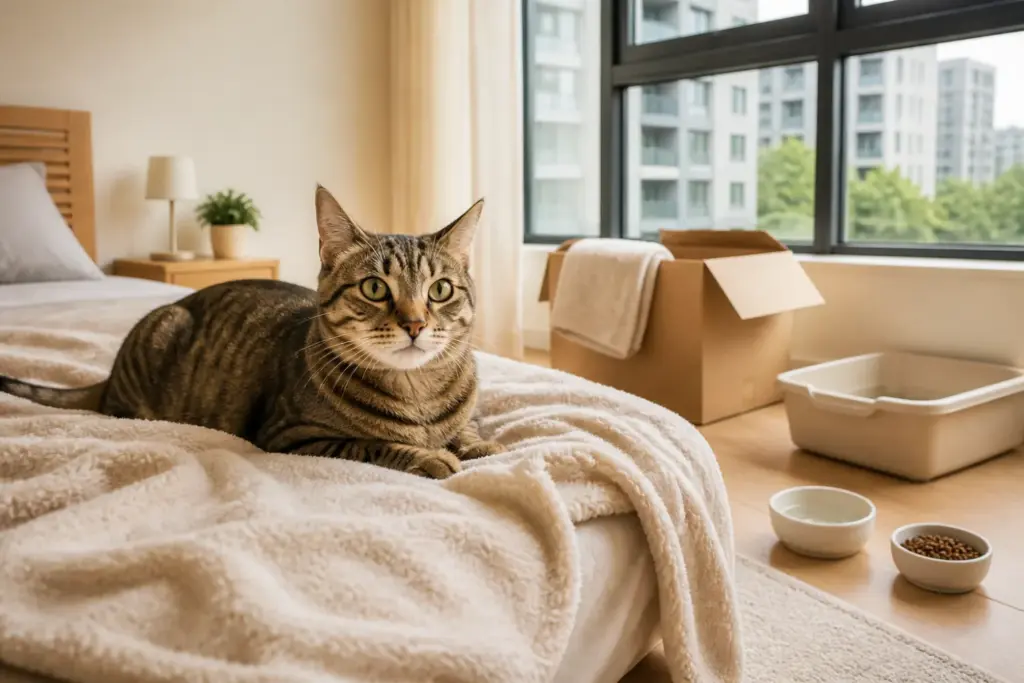
A new home can be overwhelming after travel, even when release is smooth. Instead of introducing the entire home at once, prepare one closed, quiet room with water, food, a familiar litter setup, a resting place, and a safe hiding option. Keep doors and windows secure, and let your cat set the pace for exploring.
Ask the person collecting your cat to keep the first handover simple. A predictable room, low noise, and familiar smells are often more useful than a busy welcome. This preparation also makes the transition easier if the collection date moves after a monitored stay.
Who should confirm each part of the plan?
| Item to confirm | Why it matters | Who confirms it |
|---|---|---|
| Country category | It shapes the document assessment and quarantine planning. | AVS |
| AVS import licence | It is part of the import pathway. | AVS, with your relocation team if used |
| Quarantine arrangement | It determines which arrival scenario you activate. | AVS and the relevant facility |
| Airline cargo acceptance | It aligns your cat’s journey with the booked flight. | The airline or its handling channel |
| Veterinary appointment timing | It keeps records and travel preparation in sequence. | Your veterinarian |
Keep these confirmations in one shared plan rather than relying on memory. If several people are involved, name one person who can receive updates and make routine handover decisions.
Frequently asked questions
Can I assume my cat will be released on the day of arrival?
No. The possible quarantine range is 0 to 30 days depending on the confirmed category. Prepare for a prompt release while keeping a monitored-stay plan ready until AVS confirms the relevant pathway.
Does my cat need an AVS import licence?
An AVS import licence is part of the import pathway, alongside a microchip and vaccination records. Confirm the current sequence for your travel date before finalising your booking.
Are cat documents different from dog documents?
The core document pathway for cats and dogs is broadly similar, with sequence being crucial. Confirm any travel-date details with the team rather than assuming a dog itinerary applies unchanged.
When should I begin planning?
Allow roughly four to ten weeks before arrival. Starting early gives you room to coordinate records, the licence, airline acceptance, and both possible arrival scenarios.
Who can help if quarantine is needed?
PTA can coordinate facility booking, status monitoring, and release coordination through its partner network. The exact arrangement should be confirmed for your cat’s date and pathway.
Bringing a cat to Singapore is easier when the plan leaves room for the confirmed arrival pathway. Contact PTA to coordinate your documents, arrival support, and a calm handover plan around your travel date.