Importing Cats to Thailand: Vaccines, Permit, Cabin
November 5, 2026
Moving a cat to Thailand looks simpler than moving a dog, and in some ways it is. Cats need fewer vaccines for Thai entry, most are small enough to be considered for the cabin, and pets that meet the requirements are not quarantined on arrival. The catch is that the cat-specific parts of the move are the ones owners tend to leave until late: the second vaccine on the Thai list, the airline’s view on flat-faced breeds, and how a nervous cat copes with a long day of travel.
The paperwork itself follows the same path for cats and dogs. Thailand’s Department of Livestock Development (DLD) issues the import permit, your departure country issues the official health certificate, and an animal quarantine officer checks everything when your cat lands in Bangkok.
This guide covers what is different for cats: the vaccines, the permit request, flying in the cabin or as cargo, Persian and other snub-nosed breeds, and arrival at Suvarnabhumi (BKK). We do not quote fees or fixed timelines, because those depend on your route and can change.
What a cat needs to enter Thailand
Our Thailand pet import overview sums up entry as an import permit, a microchip and a rabies certificate, with no quarantine for compliant pets. For a cat, the file usually looks like this.
| Item | Who handles it | What to watch for a cat |
|---|---|---|
| Microchip | Your vet at origin | Reads cleanly, and the same number appears on every document |
| Rabies vaccine | Your vet at origin | Recorded in English, with a date that fits the timing on your origin’s health certificate |
| Feline panleukopenia vaccine | Your vet at origin | Part of the usual core cat vaccine, but check it appears clearly on the record |
| DLD import permit | Animal quarantine station in Thailand | Requested by email before travel, using your flight details |
| Official health certificate | Veterinary authority of the exporting country | Issued close to departure, after the permit is approved |
| Airline booking | The airline | Cabin or cargo, carrier size, and any limits for flat-faced breeds |
Rabies and feline panleukopenia: the two vaccines
The Thai government’s own pet guidance lists two vaccines for cats: rabies and feline panleukopenia (also called feline distemper). Dogs have a longer list, which is covered in our guide to importing dogs to Thailand.
Panleukopenia protection is normally part of a cat’s routine core vaccine, so many indoor cats already have it. The problem is usually the paperwork, not the jab. Older records may be in another language, list only a brand name, or show a booster that has lapsed. Ask your vet to check that both vaccines are current and clearly named in English before you send the permit request.
Timing is set by the health certificate your departure country uses for Thailand, and it differs by origin. On the US route, for example, the current certificate asks for vaccines given at least 21 days before departure; our US to Thailand guide explains that version. Do not assume the same numbers apply from every country. If a booster is due around your travel month, give it early so it does not push the flight back.
Requesting the DLD import permit
According to the Thai guidance, the permit is requested by email to the animal quarantine station at least 7 working days before travel. The request includes the R1/1 application form, a copy of your passport, a photo of your cat, the flight itinerary, the vaccination record in English and the microchip certificate. A veterinary officer then reviews it, which the guidance says takes at least 3 working days, and the approved permit is sent back by email.
Treat those as minimums. If the officer asks for more information, the clock restarts, and your vet at origin usually needs the approved permit before finalising the health certificate. Our Thailand pages suggest starting the Thai side 3 to 6 weeks ahead, and the export side in your current country may need longer. Because the permit request carries your itinerary, ask how a date change would be handled before you submit.
Cabin or cargo: how cats usually fly to Bangkok
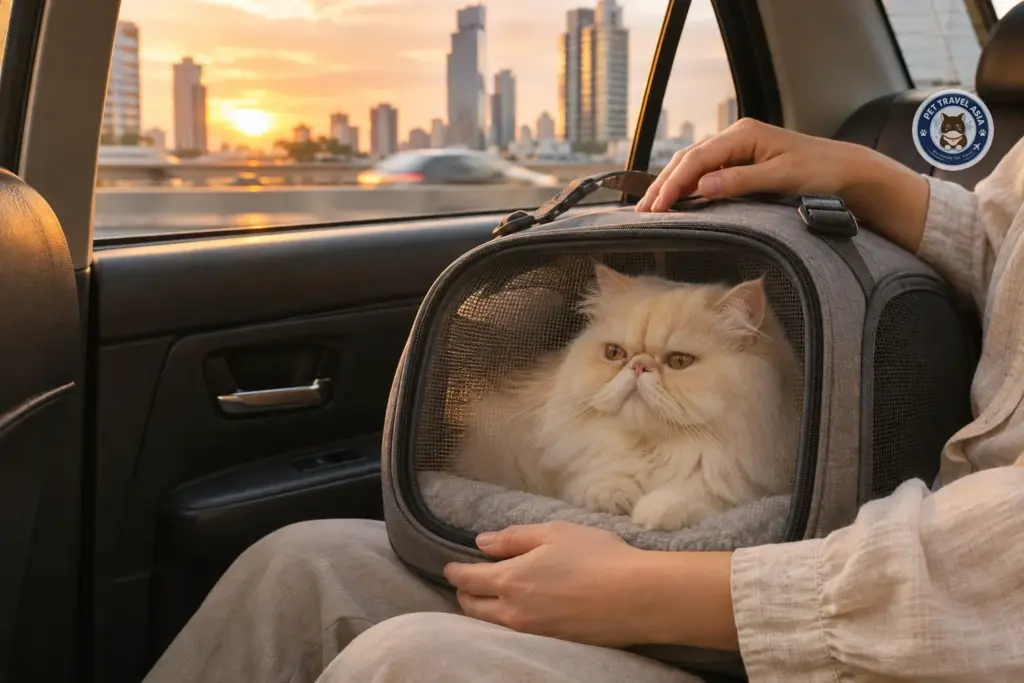
Many cats are small enough to be considered for the cabin, which is often the calmer option for a cat that does not like being out of sight. Whether it is allowed depends on the airline, the route and the combined weight of cat and carrier. Some airlines do not take pets in the cabin on international flights at all, so the cabin is a question to ask early, not an assumption. Our guide to cargo, cabin and checked baggage explains how the three options differ.
How your cat travels also changes where it is inspected in Bangkok. The Thai guidance places the animal quarantine counter for pets carried by passengers next to baggage carousel No. 8, open 24 hours. Pets that arrive as air cargo are handled at a quarantine office in the cargo terminal’s free zone, which the guidance lists with weekday office hours only. A cat flying as cargo that lands on a Friday evening may therefore wait longer to be released.
Persian, Exotic and other flat-faced cats
The DLD guidance we use does not list breed bans for cats. The limits come from airlines. Brachycephalic, or flat-faced, cats such as Persians, Exotic Shorthairs and Himalayans breathe less efficiently, so some carriers refuse them in the hold, restrict them in hot months, or only accept them in the cabin. Our Thailand relocation page notes that snub-nosed breeds face extra restrictions on Bangkok routes.
For these cats, the airline decides the plan before the documents do. Check which carriers will accept your cat on your exact route, then build the vaccine and permit timing around that flight. Where cabin travel is not offered to you directly, our VIP in-cabin escort service may be an option, subject to your cat’s profile, the route and airline approval for each flight.
Keeping a cat calm on a long travel day
A cat’s biggest challenge is often stress rather than paperwork. A long transit, a strange carrier and a noisy terminal can make even a relaxed cat hide or refuse water. A few habits help:
- Leave the carrier open at home for several weeks, with familiar bedding inside, so it becomes a normal resting place.
- Choose the shortest routing you reasonably can, and avoid tight connections where possible.
- Line the carrier with an absorbent pad and pack a spare, plus a small amount of food and a way to offer water.
- Ask your vet before travel about any calming product. Sedation is generally discouraged for flying, especially for flat-faced cats.
Our pet travel kit guide has a fuller packing list.
Arriving at Suvarnabhumi with your cat
At BKK, the quarantine officer checks your originals: your passport, the vaccination book, the official health certificate and a printed copy of the permit. Keep them together in your hand luggage, not in checked bags. The guidance also lists a small entry fee per animal paid in cash, so carry some Thai baht and check the current amount before you fly. Once the inspection is complete, the officer issues the import approval documents and your cat can go home with you. For the export side and the wider timeline, see our pet relocation to Thailand guide.
Frequently asked questions
Do cats need quarantine in Thailand?
Our Thailand overview describes no quarantine for pets that fully meet the requirements. Your cat is still inspected on arrival, and a missing or mismatched document can change the outcome, so the file needs to be complete.
Which vaccines does a cat need for Thailand?
The Thai guidance lists rabies and feline panleukopenia for cats. The timing between vaccination and travel comes from your departure country’s health certificate, so check it with your vet when you start.
Can my cat fly in the cabin to Bangkok?
Often, but not always. It depends on the airline, the route and the weight of cat plus carrier. Confirm with the airline before you book, and check where your cat will be inspected on arrival.
Can I bring a Persian cat to Thailand?
The DLD guidance we use does not list cat breed bans, but airlines often limit flat-faced breeds. Confirm the airline first, then plan the documents around that flight.
Planning to bring your cat to Thailand? Send us your route and your cat’s details, and we will review the vaccines, permit timing and flight options with you, including whether the cabin is realistic for your cat. For a first estimate, try the cost calculator.