Military Pet Relocation Assistance for Asia Postings
August 22, 2026
A reporting date can arrive before a final Asia destination is confirmed. That puts pet owners in an awkward position: some preparation must be counted back from arrival, yet committing to the wrong destination plan can waste effort.
The useful distinction is simple. A pet’s identity and health history can be strengthened now, while destination-specific timing must wait for the confirmed posting. This guide helps you protect the preparation window without guessing at requirements.
Keep the reporting date and pet calendar separate
Your reporting date is a fixed personal deadline. Your pet’s arrival plan has a different calendar, shaped by the destination authority and the records already in hand. Treating them as one deadline often leads to either premature assumptions or a late start.
Begin by gathering every veterinary record in one place and checking that dates, pet identification, and vaccine entries can be read clearly. This is not a final application package. It is the evidence you will need when the destination becomes known. A current, readable history also makes it easier for a veterinarian to identify gaps without recreating the story from memory.
If a rabies titer may become relevant, understand its role as a scheduling dependency rather than a generic box to tick. Our rabies titer guide explains the subject in more detail.
What is safe to start before the posting is final
Some work retains value whether the posting lands in Japan, South Korea, or another Asian destination. Start with permanent identification and a clean health record, then keep the pet’s routine stable while you wait for the assignment to settle.
- Ask your veterinarian to confirm the microchip record and keep its number consistent across documents.
- Review rabies vaccination entries for a clear sequence connected to that identification record.
- Keep copies of clinical notes, vaccine certificates, and laboratory correspondence together.
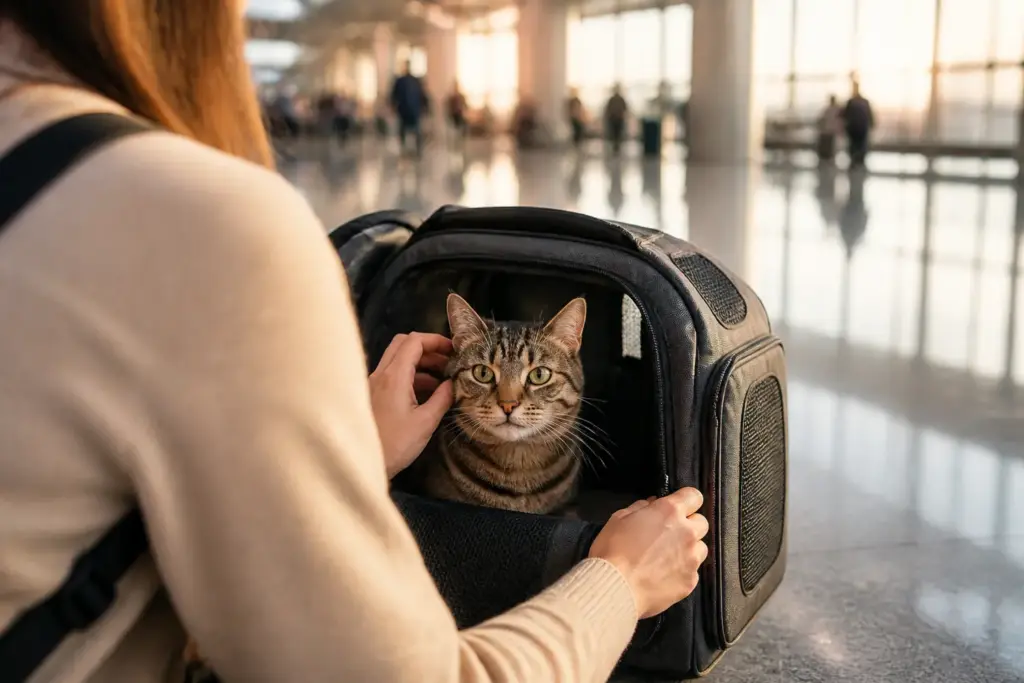
- Help your pet become comfortable resting in its travel enclosure. For construction and fit guidance, see the IATA crate guide.
Start by protecting the identity and health record that every later destination review will rely on. This preparation does not replace country checks, but it avoids losing time once the location is confirmed.
Why Japan and South Korea cannot be planned as the same move
Nearby destinations can have very different preparation windows. Japan’s requirements described on our Japan pet import page include a microchip, two rabies vaccinations, a rabies titer, early notification, and a 180-day wait before arrival. The same page recommends planning seven months or more and notes that AQS handling can range from a short check to a much longer stay depending on document readiness.
South Korea is different. Our South Korea pet import page describes a microchip, rabies titer, and APQA import inspection certificate, with a planning range of four to six months. It also notes that compliant pets from low-risk origins may have no quarantine. These are destination facts, not interchangeable templates, and regulations can change.
| Confirmed destination | What changes the calendar | What to do while uncertain |
|---|---|---|
| Japan | MAFF/AQS conditions, including the linked 180-day rabies-titer wait | Preserve the microchip and vaccination sequence, then confirm the arrival plan |
| South Korea | APQA conditions and the linked four-to-six-month planning range | Preserve the same core records, then review the destination-specific file |
Questions for your own transportation office and base veterinary facility
Some questions are outside a civil relocation guide. Ask your transportation office and base veterinary treatment facility directly about arrangements tied to your assignment, family travel, or local living situation. They are the right source for those decisions. PTA can focus on the destination-country preparation that applies to the pet’s international arrival.
When your pet travels after you do
A later pet journey can be a sensible plan when the owner must report first. It creates time to keep veterinary records current, continue calm carrier practice, and complete the destination review without forcing an arrival date that the paperwork cannot support. It is a separate journey, not a failed one.
Keep one responsible caregiver, a clear record folder, and a way to share updates with the veterinarian and family. The final destination should still be reconfirmed before any travel commitment is made.
Once the posting is confirmed, switch to the right corridor
When Japan is confirmed, use our United States to Japan guide for route-specific next steps. If South Korea is confirmed, continue with the United States to South Korea guide. For either destination, the import page remains the place to verify the current country requirements.
Frequently asked questions
Can I begin before I know which Asian destination I have?
Yes. Focus on readable identification and health history, plus calm carrier familiarity. Hold destination-specific bookings, notices, and arrival decisions until the posting is confirmed.
Does a microchip alone make my pet ready?
No. It is the anchor for the record, but each destination may also assess vaccination history, testing, notifications, and arrival documents.
Should I assume Japan and South Korea take the same amount of time?
No. The planning information on the linked Japan and South Korea pages differs. PTA verifies the current requirements for the confirmed route before travel.
Is it acceptable for my pet to arrive after I report?
It can be a practical arrangement when properly planned. The pet’s care, documentation, and destination review still need continuous attention during the gap.
Where can I find a simple file check?
Use our pet import checklist to organize records, then confirm which parts apply to your confirmed destination.
When your location is confirmed, contact PTA to review the destination plan with a calm, current view of the requirements.