How Much Does It Cost to Ship a Dog Abroad?
July 27, 2026
Taking a dog from Indonesia to a new country can feel complicated long before departure day. A larger body, a travel crate, airline handling, destination documents, and your dog’s own routine all have to work together. The right plan starts with the dog rather than the ticket.
If you are asking how much does it cost to ship a dog, the useful answer is not one flat number. Breed policy, crate dimensions, route, destination requirements, and the support needed on each end all affect the quotation. This guide explains the dog-specific decisions that shape a safe, realistic relocation plan.
Why shipping a dog needs its own plan
Dogs vary widely in size, coat, breathing profile, and comfort around unfamiliar spaces. A crate suitable for a compact dog may be wholly unsuitable for a Labrador, German Shepherd, or mixed-breed rescue. The crate itself can also change the shipment’s chargeable weight, which is why size matters operationally as well as for comfort.
Start by confirming the destination, travel window, breed, age, current vaccinations, and measurements. Then map the route and airline options before buying a crate or fixing a date. Our pet transport process guide shows how collection, documentation, airport handling, and arrival coordination fit together.
Check breed rules and airline policies first
Some destinations restrict or prohibit particular breeds or breed types. Policies can also differ between an importing authority, a transit country, and an individual airline. Dogs described as Pit Bull type may receive additional scrutiny in some places. The exact rule depends on the current destination regulation, the documentation used to identify the dog, and sometimes the airline’s own conditions, so confirm the position for your route before making irreversible arrangements.
Short-nosed, or brachycephalic, dogs need special attention. English and French Bulldogs, Boxers, Pugs, and Boston Terriers can face cargo restrictions because respiratory risk may increase in travel conditions. A restriction is not a judgment about the dog; it is a safety policy that can change by carrier and season. Read our guide to flying with a French Bulldog, then ask the relocation team to check current options for your dog and route.
Choose an IATA-appropriate crate size
A rigid travel crate should let your dog stand naturally without the ears touching the roof, turn around, and lie down in a normal position. For length, a practical IATA-based starting point is the distance from the tip of the nose to the base of the tail, plus half the front-leg length. Width and height must also reflect the dog’s actual posture, not just its weight or a shop label.
- Measure when your dog is standing relaxed on a level surface.
- Use the dog’s full height, including upright ears where relevant.
- Check ventilation, secure fastenings, absorbent bedding, and attached water provision.
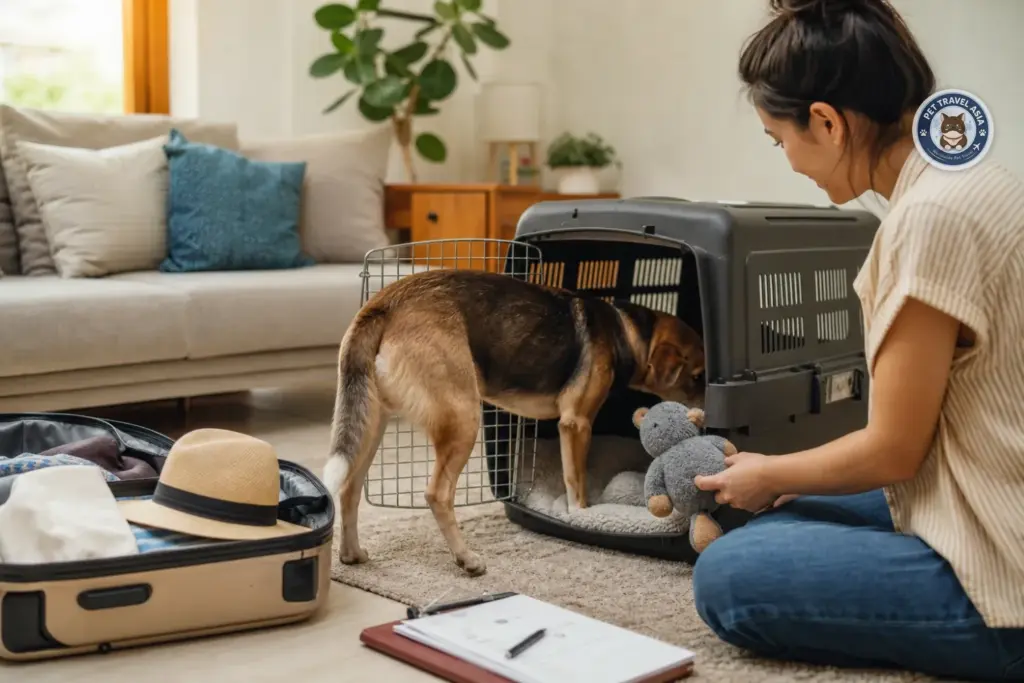
- Let the dog practise entering the crate well before travel day.
Crate requirements and accepted construction can vary with the carrier. Use our detailed IATA crate guide for the full measurement method, then have the final crate checked against the booked airline’s latest requirements.
Build a calm routine: exercise, crate training, no sedation
Preparation should lower stress rather than exhaust your dog. In the weeks before departure, make the crate a familiar resting place with short, positive sessions. Maintain normal feeding and walking habits, then plan a sensible walk and toilet break before airport handover. Avoid introducing a new food, intense exercise, or a rushed crate experience immediately before the flight.
Do not sedate or tranquillise a dog for air travel unless a veterinarian and the airline have specifically assessed the situation. IATA live-animal guidance and aviation veterinary practice caution against routine sedation because it can affect breathing, balance, and cardiovascular response at altitude. A calm, conditioned dog and an approved crate are safer foundations than a last-minute medication shortcut.
Prepare documents in destination order
Most international moves begin with microchip records, rabies vaccination evidence, and a veterinary health certificate. Depending on destination, a rabies antibody titre test, parasite treatment, import permit, or a particular waiting period may also be needed. Indonesia’s animal quarantine process can require an export health certificate or SKKH before departure. Requirements change, so work backward from the destination’s import checklist and confirm the current process with the relevant authority and our team.
Keep originals and copies aligned: the microchip number, breed description, owner details, and dates should match across every document. A mismatch that looks small on paper can delay a handover or arrival clearance.
What makes a large dog cost more to ship?
Air cargo charges generally use whichever is higher: actual shipment weight or the crate’s volumetric, or chargeable, weight. A large dog needs a larger crate, so even a lean dog can occupy significant cargo space. Route, airline availability, handling, documents, collection, and destination services can also affect the final scope.
| Cost driver | Why it moves the quotation |
|---|---|
| Chargeable weight | Air cargo generally charges whichever is higher: actual shipment weight or the crate’s volumetric weight. |
| Crate dimensions | A larger dog needs a larger crate, so even a lean dog can occupy significant cargo space. |
| Breed policy | Airline breed rules affect which flights and handling arrangements are available at all. |
| Route and airline availability | Direct or transit routing changes handling and which flights accept live animals. |
| Destination requirements | Testing, permits, or arrival procedures can add steps before departure is possible. |
| Support at each end | Collection, documentation support, and destination services are scoped separately. |
For a clearer breakdown of the cost categories without relying on a generic tariff, see our international pet shipping cost guide. A tailored quotation should state what is included, what depends on confirmation, and which destination charges may be separate.
Work with a dog-focused relocation team
A good plan connects crate checks, document timing, airline communication, airport procedures, and local coordination. PTA’s team can assess the route and work with a local partner network where needed, while keeping you clear on the decisions that still require your approval. Early planning gives more room to respond if an airline policy or destination requirement changes.
FAQ
Can every dog travel as air cargo?
No. Eligibility depends on the destination, airline, route, weather conditions, health assessment, breed policy, and crate compliance. Confirm the current position before booking.
How early should I measure the crate?
Measure early enough to allow crate training and any replacement if the first crate is not suitable. Recheck measurements before final booking, especially for a young dog that is still growing.
Can I give my dog a sedative before flying?
Routine sedation is not recommended for air travel. Discuss any medical concern with your veterinarian and disclose it to the airline or relocation team before departure.
Is a bigger crate always better?
No. The crate must allow natural standing, turning, and lying down, while remaining secure and accepted by the airline. Oversized or unsuitable construction can create its own handling issues.
Planning a dog move from Indonesia? Contact Pet Travel Asia to discuss your dog’s breed, measurements, destination, and preferred travel window before the arrangements begin.